
Understanding the Key Differences Between 2-Wheel and 4-Wheel Alignment in Lexington KY

Proper wheel alignment plays a crucial role in maintaining your vehicle’s performance, safety, and tire life. If you live in Lexington KY and want to keep your car running smoothly, understanding the differences between 2-wheel and 4-wheel alignment can help you make the right choice. This guide breaks down the key distinctions, benefits, and when to choose each type of alignment. We will also touch on how to find a cheap wheel alignment without compromising quality.
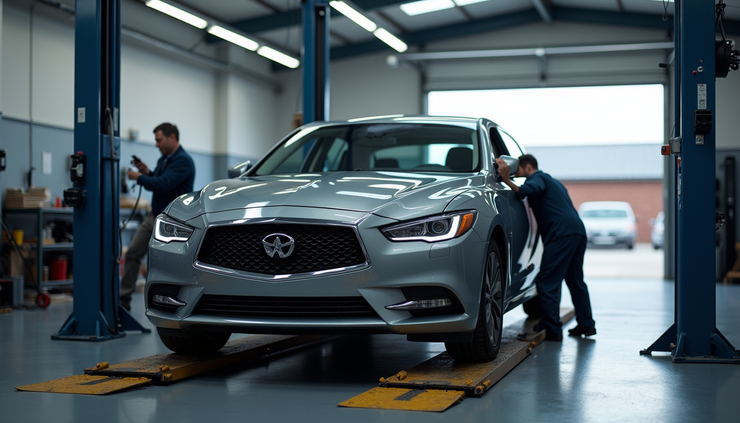
What Is Wheel Alignment?
Wheel alignment refers to adjusting the angles of your vehicle’s wheels so they are set to the manufacturer’s specifications. Proper alignment ensures that your tires make optimal contact with the road, improving handling, fuel efficiency, and tire wear.
There are two main types of wheel alignment:
2-Wheel Alignment (also called front-end alignment)
4-Wheel Alignment
Each serves different vehicle types and driving needs.
Key Differences Between 2-Wheel and 4-Wheel Alignment
Focuses on the front wheels only.
Adjusts camber, caster, and toe angles of the front wheels.
Typically used for vehicles with a solid rear axle or rear-wheel drive cars where the rear wheels do not require adjustment.
Less expensive and faster to perform.
Common for older cars or trucks with simpler suspension systems.
Adjusts all four wheels, including front and rear.
Ensures the rear wheels are aligned with the front wheels.
Necessary for vehicles with independent rear suspension or all-wheel drive.
More precise and comprehensive alignment.
Usually recommended for modern cars and SUVs with complex suspension systems.
Benefits of 2-Wheel Alignment
Cost-effective option: Since it only involves the front wheels, 2-wheel alignment is generally cheaper, making it a good choice for budget-conscious drivers seeking a cheap wheel alignment.
Quick service: The process takes less time, so you can get back on the road faster.
Sufficient for certain vehicles: If your car has a solid rear axle or rear wheels that don’t steer, 2-wheel alignment can be enough to maintain proper handling.
Benefits of 4-Wheel Alignment
Improved vehicle stability: Aligning all four wheels ensures better control, especially at higher speeds or on rough roads.
Even tire wear: Proper alignment of rear wheels prevents uneven tire wear, extending tire life.
Better fuel efficiency: When all wheels are aligned correctly, your vehicle faces less rolling resistance.
Necessary for modern vehicles: Many newer cars, SUVs, and trucks require 4-wheel alignment due to advanced suspension systems.
When to Choose 2-Wheel or 4-Wheel Alignment
Choose 2-Wheel Alignment If:
Your vehicle has a solid rear axle.
You drive a rear-wheel-drive car or truck with simple suspension.
You want a cheap wheel alignment and your vehicle’s manufacturer recommends it.
You notice front-end issues like steering wheel pull or uneven front tire wear.
Choose 4-Wheel Alignment If:
Your vehicle has independent rear suspension.
You drive an all-wheel-drive or four-wheel-drive vehicle.
You want the best handling and tire performance.
You notice uneven wear on rear tires or your vehicle pulls to one side.
Your manufacturer specifies 4-wheel alignment for your model.
How to Find Quality Wheel Alignment in Lexington KY
If you need wheel alignment in Lexington KY, look for a shop that offers both 2-wheel and 4-wheel alignment services. Here are some tips:
Check reviews: Look for customer feedback on service quality and pricing.
Ask about equipment: Modern alignment machines provide more accurate results.
Compare prices: Find a cheap wheel alignment option that does not sacrifice quality.
Look for certifications: Technicians certified by the National Institute for Automotive Service Excellence (ASE) are a good sign.
Why Proper Wheel Alignment Matters
Ignoring wheel alignment can lead to:
Premature tire wear, costing you more in replacements.
Poor fuel economy due to increased rolling resistance.
Unsafe handling and increased risk of accidents.
Strain on suspension components, leading to costly repairs.
Regular alignment checks, especially if you notice steering or tire issues, help maintain your vehicle’s performance and safety.


Comments